Attention Cricut Owners Who Keep Hearing “You Should Sell These…”
Make Money With Your Cricut
The pricing formula, the first products to make, and how to find buyers. Without needing followers.
30-day money-back guarantee: If the formula doesn’t pay for the book on your next order, I’ll refund you. No questions asked.

My name is Wendy Farris. I live in Zanesville, Ohio. For years, I ran the front desk of a dentist’s office.
I also had a Cricut sitting in my spare bedroom for fourteen months before I charged anyone a dollar for what it made.
Not because I wasn’t good at it. Because nobody ever handed me the business layer.
The pricing math. The Etsy titles buyers can actually find. The follow-up system that brings past customers back.
The minimum order conversation with a real estate agent who wants twelve tumblers in two weeks.
I figured all of that out the slow way.
Eight months of trial and error, one lucky $190 order priced by accident, and a $45 small business workshop in Columbus where I finally sat down with someone who showed me I was undercharging bulk orders by 35 percent while 22 repeat buyers sat idle.
I ran the follow-up sequence from the back of that workshop handout. Within 60 days, 11 of those 22 customers came back. Four became regular reorder clients. That one change added $590 to my monthly revenue without a single new customer.
This book is everything I worked out between that accidental first order and the $2,500 a month I clear now.
What You Get
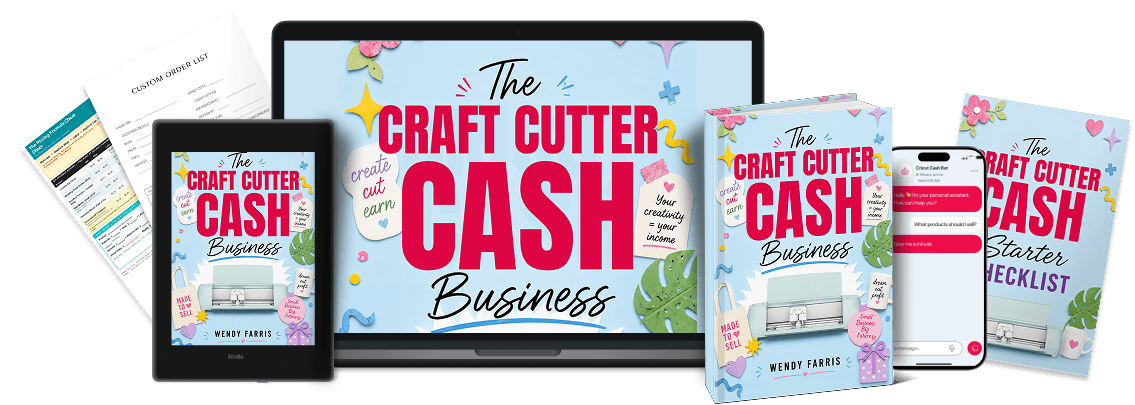
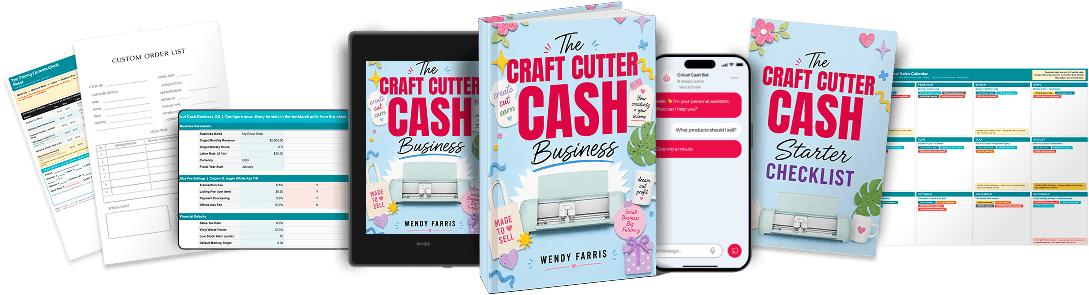
Here’s exactly what comes with The Craft Cutter Cash Business for $27:
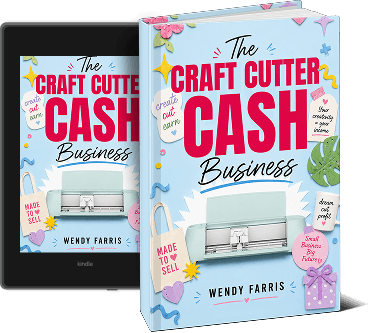
The Craft Cutter Cash Business eBook
Every system in my shop, in order: finding your first repeat buyers, the pricing formula, the follow-up sequence that turned 22 idle customers into $590 a month, and the corporate gifting playbook that became my most reliable income. If I’d bought this in month one, it would have saved me 14 months of guessing. ($27 value)
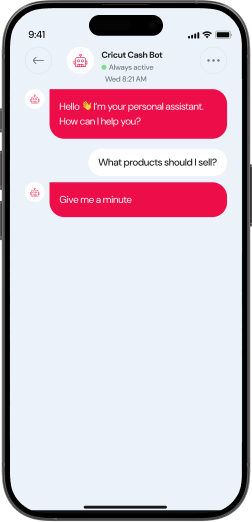
Your Personal Craft Cutter Business Advisor
trained on the pricing system in this book. When you hit a question between chapters, this is where you go. ($27 value)
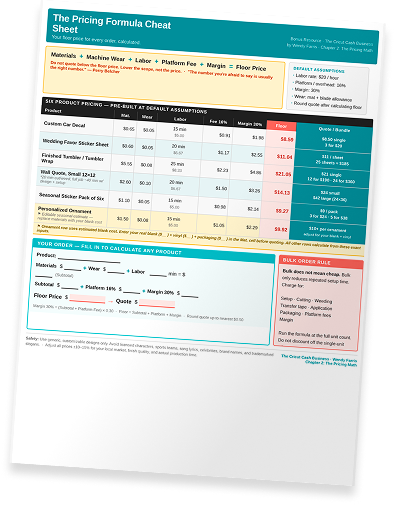
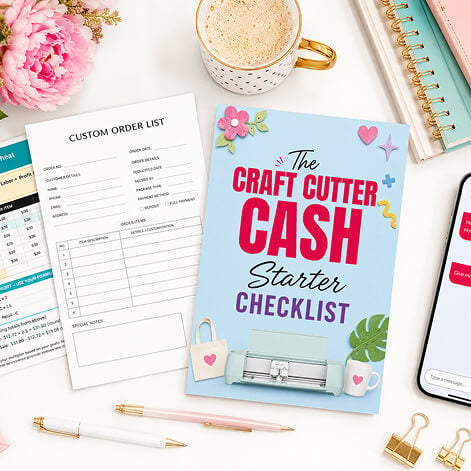
The Cricut Pricing Cheat Sheet
The one-page cheat sheet that fixed my bulk quoting. Put in your material cost and your time. It will help you calculate the number. You stop working for $6 an hour the same day. ($17 value)
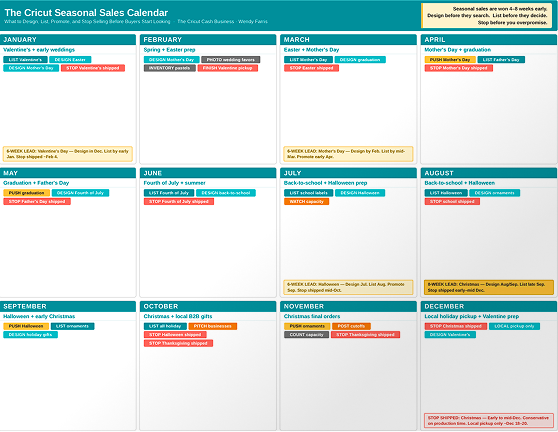
The Seasonal Sales Calendar
Which Cricut products to push each month, with six-week lead times flagged for Valentine’s Day, Mother’s Day, Halloween, and Christmas. ($17 value)
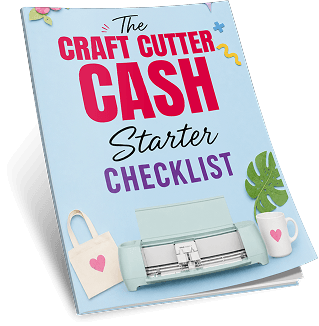
The Revenue Starter Mind Map (Checklist)
Every income path available from equipment you already own: custom orders, Etsy digital files, local business clients, seasonal wholesale, and craft fair rotation. ($17 value)
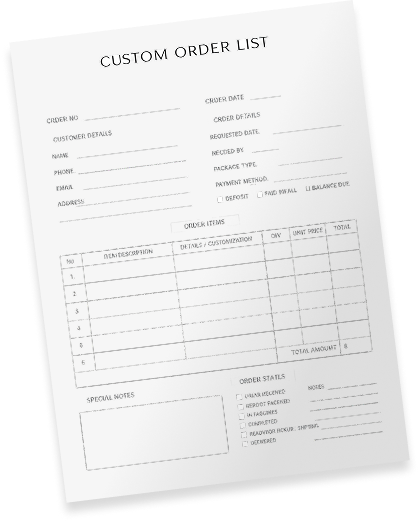
The Custom Order Form (Canva Template)
A branded one-page intake form for every customer order. Client name, product, size, color, quantity, due date, price, deposit. Stop orders from living in your head. ($17 value)
30-day money-back guarantee: if the pricing formula doesn't pay for the book on your next order, I'll refund it. No questions.
The Machine Isn't the Problem
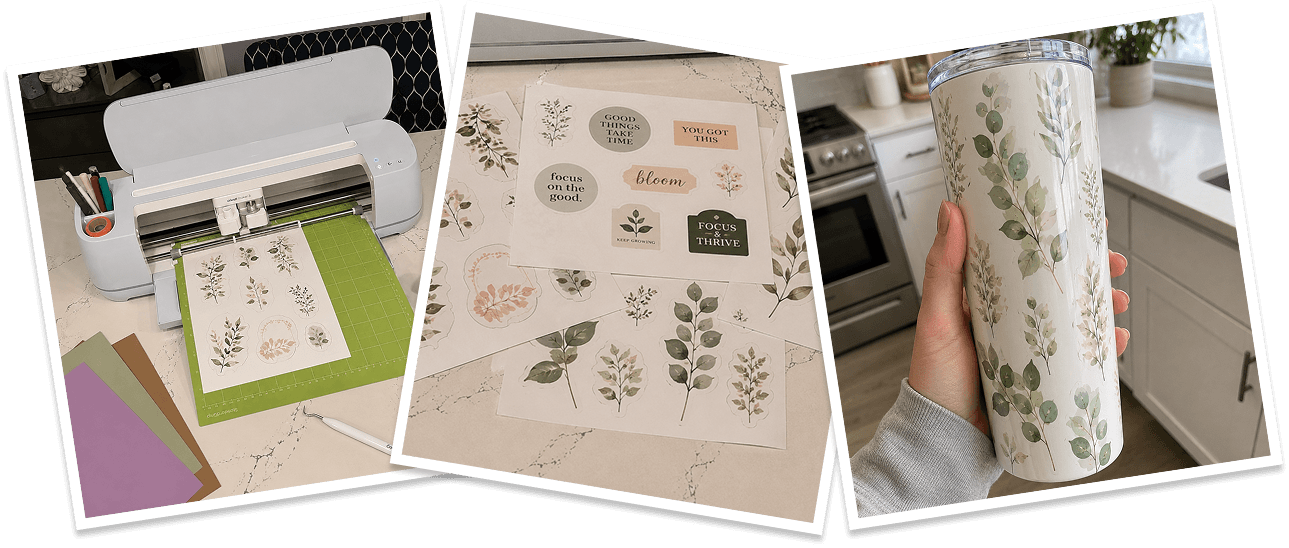
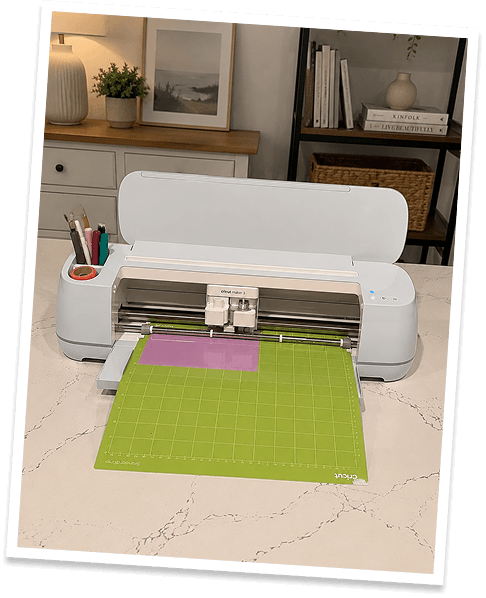
If your Cricut has been making gifts and things people keep telling you to sell, you already have what you need.
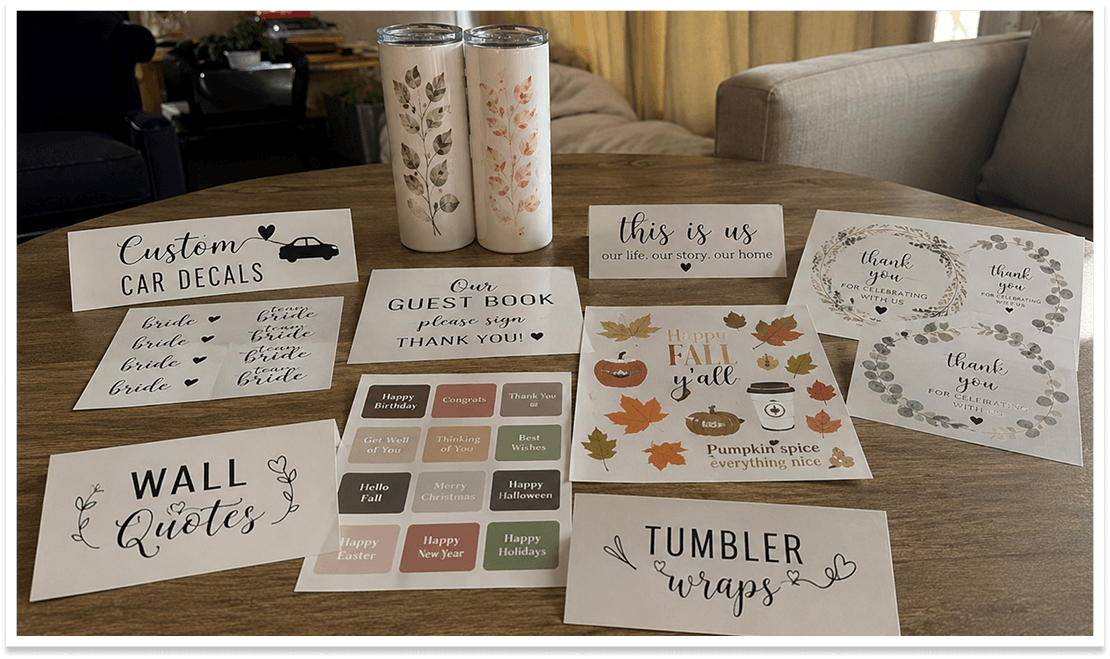
- Custom car decals
- Wedding favors
- Tumbler wraps
- Wall quotes
- Seasonal stickers
These are the five products that move consistently. What’s missing isn’t skill. It’s the operating system around the machine you already own.
The first paid order taught me the problem.
In February 2022, a real estate agent named Donna came into the dental office where I worked.
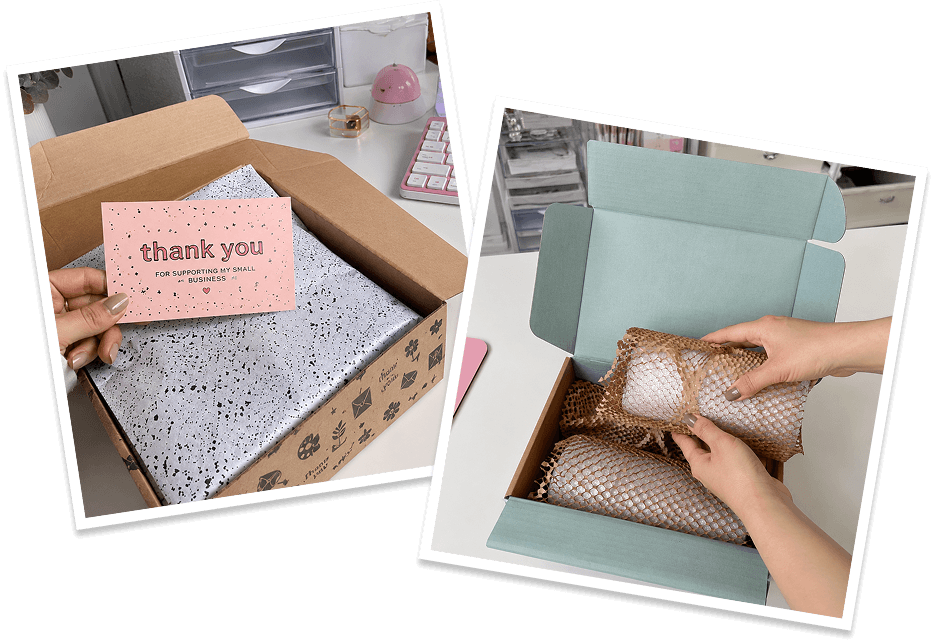
She saw a tumbler I made for our receptionist’s birthday and asked if I could make twelve for a client appreciation event. I said yes. She asked what I charged. I made up a number. She wrote the check without blinking.
That night I did the math. By accident, I had priced the order about right. That bothered me more than if I had priced it wrong. If I had guessed correctly once, I could guess wrong the next ten times. I needed a formula, not a lucky answer.
Here's why most craft cutter sellers stay stuck.
The craft layer is overcovered. Ten thousand YouTube videos cover weeding, layering HTV, and calibrating a blade. The business layer is what’s missing.
Most sellers underprice because they leave out time. They count the blank and the vinyl. They forget the 35 minutes spent resizing a name, fixing a cut, weeding small letters, applying transfer tape, and packing the order.
Most sellers lose repeat customers because they finish the order and disappear. I had 22 people who had bought from me more than once and never heard from me again.
Most sellers avoid bulk orders because they’re afraid the customer will say no to the real number. That fear cost me $1,800 in 2022. I was giving away bulk orders at 30 to 40 percent under price. It took sitting down with a business coach at that Columbus workshop to see it clearly. He told me one thing I’ve repeated before every bulk quote since:
The number you're afraid to say is usually the right number.
What the Book Actually Shows You
This book is the Craft Cutter Cash Business. Eight pieces, in order: product selection, pricing math, Etsy setup, order workflow, repeat customer sequences, local B2B accounts, legal and tax basics, and capacity decisions. Each piece builds on the one before it. That sequence is what can turn a machine in a spare bedroom into an opportunity for an extra $2,500.
- Pricing that doesn't leave money behind.
Materials plus machine wear plus labor plus platform fee equals a floor price you never go under. Chapter 2 walks through the math for each of the five products.
- Etsy listings that show up in search.
Keyword research and title structure. Chapter 4 covers both, including how to use EverBee to find what buyers are actually typing.
- An order system that scales.
Without a production log and intake workflow, every busy week turns into a lost order. Chapter 5 builds the system from scratch.
- Local B2B accounts that reorder on a cycle.
Real estate agents, mortgage brokers, schools. Bulk buyers who aren’t shopping Etsy for the lowest price. Chapter 7 is the one most sellers skip and shouldn’t.
- The growth decisions that actually matter.
When to add a second machine. When more hours mean the problem is pricing, not capacity. Chapter 10 is the map.
30-day money-back guarantee: if the pricing formula doesn't pay for the book on your next order, I'll refund it. No questions.
The Numbers, Straight
Working 15-18 hours a week from a spare bedroom, I built this setup with the potential to generate an extra $2,500 a month. Two commercial-grade cutting machines, a secondhand heat press I paid $180 for, and a 40-customer direct client list that bypasses Etsy entirely.
That’s where the system can take you. It’s not where month one starts.
The first month is about getting your pricing right and landing a few real orders. By month six, a repeat customer sequence is running and local B2B accounts are starting to fill in the gaps. At twelve months, the business has a floor it didn’t have before.
The path runs through the middle: real work, real numbers, in a steady direction.
Pricing is where I lost the most money.
Most people leave time. They count the blank and the vinyl. They forget the 35 minutes of actual work per order.
In the book, I use this formula:
Materials + Time + Overhead + Margin = Price
A single tumbler might land around
$21
A dozen tumblers might land around
$190
A custom car decal might land around
$8.50
The formula stays the same. The first time you run it, it feels slower than guessing. After that, it gives you a number you can say without apologizing.
30-day money-back guarantee: if the pricing formula doesn't pay for the book on your next order, I'll refund it. No questions.
Custom orders need a track to run on.
The customer sends the name. Then the color. Then the size. Then she changes the spelling. If all of that lives in text messages, you will miss something. I did.
The order flow I use now:
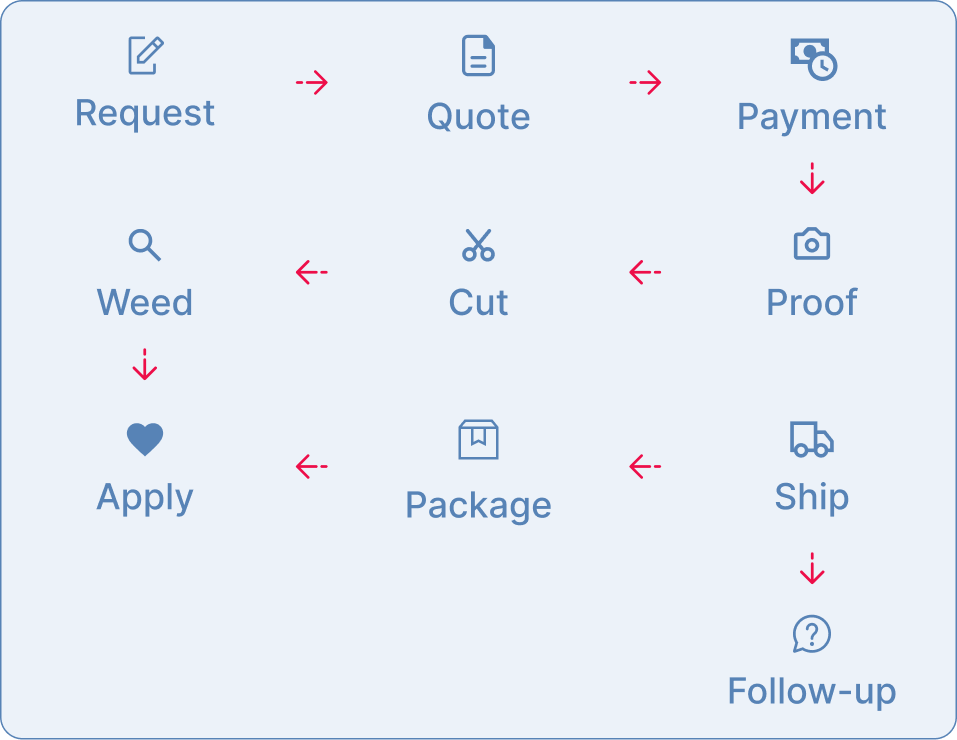
When you use the same order every time, the work gets calmer. That’s how a custom order stays paid work instead of a favor with a tracking number.
Customers matter more than followers.

I won’t teach you to become a social media person.
At that Columbus workshop, I heard something that changed how I looked at my index cards of past buyers:
“Forty repeat customers beat four thousand followers every day of the week. The follower is a spectator. The customer is a participant.”
I had 22 people who had bought from me more than once and never heard from me again. I ran a two-step follow-up that weekend. Within 60 days, 11 came back. Four became reorder clients on a six-to-eight-week cycle. That shift added $590 to my monthly revenue without a single new customer.
A bride who bought favor stickers may need bridesmaid tumblers. A teacher who ordered classroom decals may need holiday gifts. A real estate agent who bought closing gifts may need another batch in six weeks.
Most sellers finish the order and disappear. I show you how to follow up without being strange about it.
30-day money-back guarantee: if the pricing formula doesn't pay for the book on your next order, I'll refund it. No questions.
Local accounts can be better than random orders.
The highest-margin work I do doesn’t happen on Etsy. It happens in office buildings.
Real estate agents need a closing gift every time they sell a house. Mortgage brokers live on referrals. Insurance offices want to stay top of mind at renewal. All three need personalized gifts on a recurring cycle and don’t want to spend four hours shopping for them.
I walk into a local real estate office around 10 AM with one sample tumbler and a card. I ask the office manager: I specialize in local closing gifts, names, dates, and neighborhood coordinates. If you ever need sets of twelve for new homeowners, I would love to be your local source.” I leave the sample and go.
About one in three offices returned my calls within a month. In week seven, I sent a text: “Doing a batch Thursday. Want me to add a dozen to the run?” That’s the whole system.
That’s quiet money. It pays for materials, then the machine, then the next thing your household needs.
30-day money-back guarantee: if the pricing formula doesn't pay for the book on your next order, I'll refund it. No questions.
Inside the Book You'll Learn:
- Why most Cricut craft sellers stay busy without getting paid correctly
- Which five product types I would start with if I were beginning again
- How to run the pricing formula before you quote a custom order
- What to do when a customer pushes back on price
- How to write Etsy listings around buyer search terms
- How to photograph products without turning your house into a studio
- How to keep custom orders organized before mistakes happen
- Why repeat customers matter more than strangers scrolling past your shop
- How to approach local buyers without sounding like you joined an MLM
- What designs to avoid so you do not put your shop at risk
- How to think about sales tax, Schedule C basics, and when to ask a professional (Note: This is not legal or tax advice. I am not your CPA or attorney. I cover the basics in plain English because skipping that layer can cost you later.)
30-day money-back guarantee: if the pricing formula doesn't pay for the book on your next order, I'll refund it. No questions.
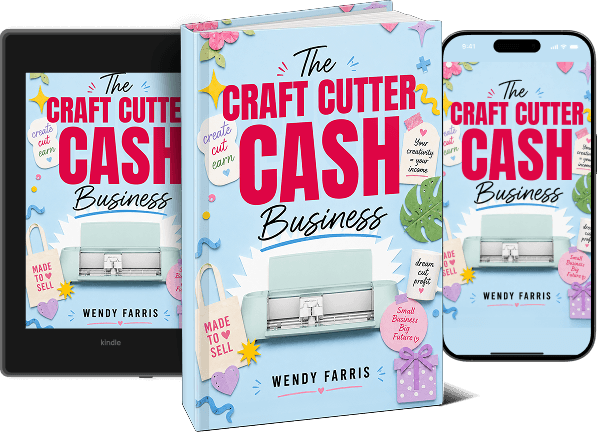
Every system in my shop, in order: finding your first repeat buyers, the pricing formula, the follow-up sequence that turned 22 idle customers into $590 a month, and the corporate gifting playbook that became my most reliable income. If I’d bought this in month one, it would have saved me 14 months of guessing. ($27 value)
30-day money-back guarantee: if the pricing formula doesn't pay for the book on your next order, I'll refund it. No questions.
Earnings note: The $2,500/month figure is my result from my own shop after the system was built. It’s not a guarantee. Your results depend on your products, pricing, consistency, market, time, and follow-through.
1. Your Info
Your Order Info
2. PAYMENT
Your Payment Details
You’ll get an order confirmation and download link by email.
What’s Included
- The Craft Cutter Cash Business Book - $27 value
- The Pricing Cheat Sheet - $17 value
- The Seasonal Sales Calendar - $17 value
- Follow-Up Scripts / Repeat-Buyer Templates - $17 value
- Reader Q&A support access - $27 value
- The Craft Cutter Cash Business Book - $27 value
- The Pricing Cheat Sheet - $17 value
- The Seasonal Sales Calendar - $17 value
- Follow-Up Scripts / Repeat-Buyer Templates - $17 value
- Reader Q&A support access - $27 value
30-Day Money-Back Guarantee
100% Safe & Secured Data
Cricut® is a registered trademark of Cricut, Inc. The Craft Cutter Cash Business is an independent publication and is not affiliated with, endorsed by, or sponsored by Cricut, Inc.
ClickBank is the retailer of products on this site. CLICKBANK® is a registered trademark of Click Sales Inc., a Delaware corporation located at 1444 S. Entertainment Ave., Suite 410 Boise, ID 83709, USA and used by permission. ClickBank’s role as retailer does not constitute an endorsement, approval or review of these products or any claim, statement or opinion used in promotion of these products.